Home battery chemistry: LiFePO4 or lithium-ion?
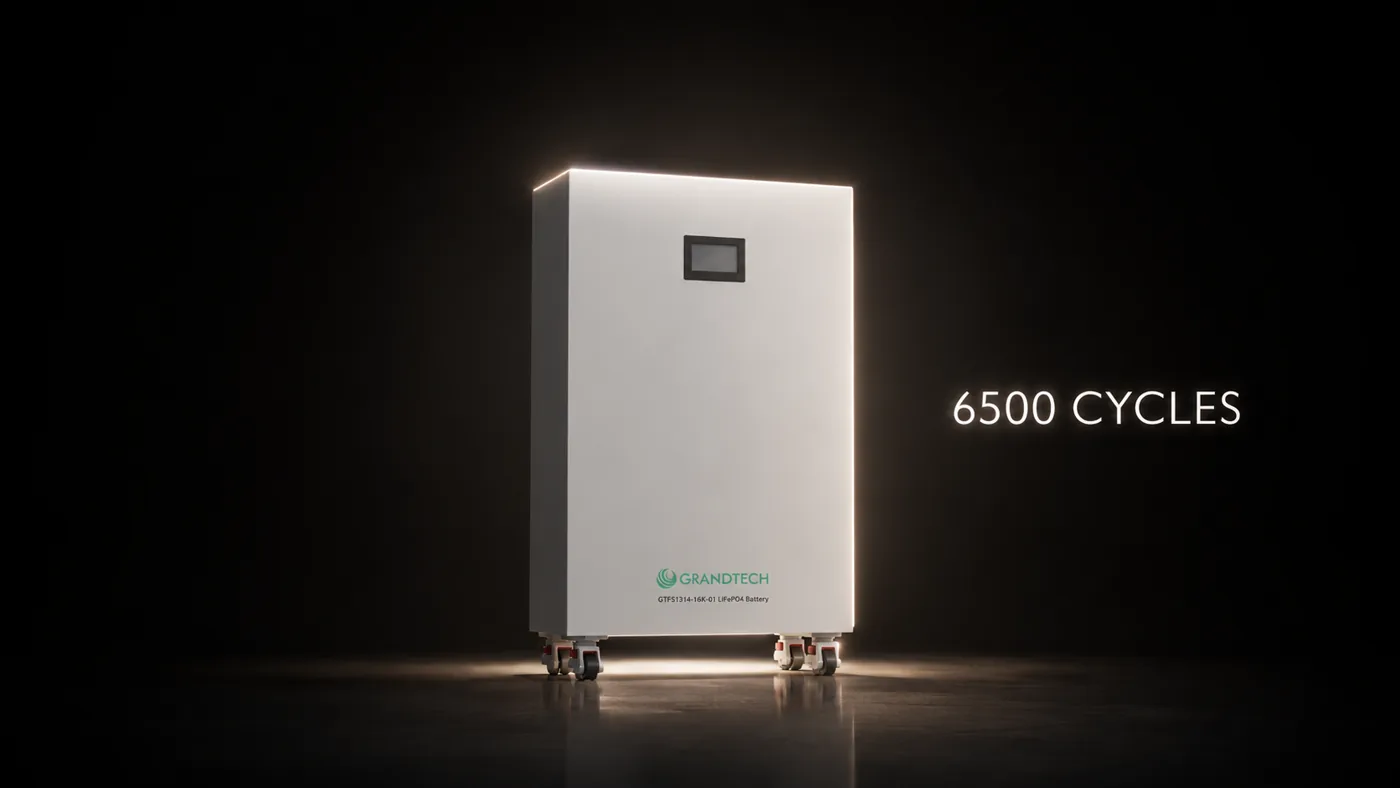
LiFePO4 belongs to the lithium-ion family; what sets it apart is a cathode made of lithium iron phosphate rather than nickel-manganese-cobalt (NMC). In a home battery, that swap brings better safety, a far longer cycle life (6,500 to 8,000+ cycles against roughly 1,000 to 2,000) and a broader temperature window. The trade-off is a pack that's slightly bigger and heavier. Today, LiFePO4 is the standard choice for modern home batteries.
One family, two very different cathodes
"Lithium-ion" names a way a battery works, not one particular chemistry. LiFePO4 (LFP) is built on a cathode made of lithium iron phosphate, whereas NMC (nickel-manganese-cobalt) is what you'll find in most older home and EV batteries. The differences that count in home storage all trace back to that cathode.
Fire safety
Among mainstream lithium chemistries, LiFePO4 comes out as the safest. Its phosphate cathode stays stable both chemically and under heat, it strongly resists thermal runaway, and a damaged cell gives off no oxygen. Without that oxygen, it can't keep a fire going the way an NMC cell can.
For that reason, LiFePO4 has become the usual pick for home batteries that sit in garages or inside living areas.
Years of service you can expect
A LiFePO4 cell is rated at 80% DoD for about 6,500 to 8,000+ full cycles, while a typical NMC cell manages roughly 1,000 to 2,000. If the battery cycles every day, that gap works out to around 5 years of service for NMC versus 15-20 years for LiFePO4. On top of that, LiFePO4 keeps more of its original capacity as it ages.
Heat, bulk and cost per cycle
LiFePO4 copes with a wider span of operating temperatures and stands up to heat better, a real plus when the battery goes in a garage or outdoors. Its compromises are small:
- Size and weight: energy density is slightly lower, so a pack holding the same kWh is a bit larger and heavier.
- Upfront cost: per kWh, the cells cost about the same as NMC, or slightly more.
- Long-run value: because it lasts so much longer, each cycle ends up costing less.
Questions people ask
Does LiFePO4 beat lithium-ion?
LiFePO4 is itself a kind of lithium-ion. Set against conventional NMC lithium-ion, it's the safer option and survives far more cycles, though it needs a little more space and weighs slightly more per kWh. For a battery that stays put in a home, that balance tips toward LiFePO4.
How many years will LiFePO4 last?
It's rated for 6,500 to 8,000+ charge cycles, each at an 80% DoD. Cycled once a day, that adds up to roughly 15-20 years, well beyond what earlier lithium-ion chemistries deliver.
Can I safely put a LiFePO4 battery indoors?
You can. A stable cathode and strong resistance to thermal runaway make LiFePO4 the chemistry of choice for batteries mounted in garages and utility rooms, provided the system has a BMS and carries the relevant UL/IEC safety certifications.