Grid-tie or hybrid: choosing your inverter
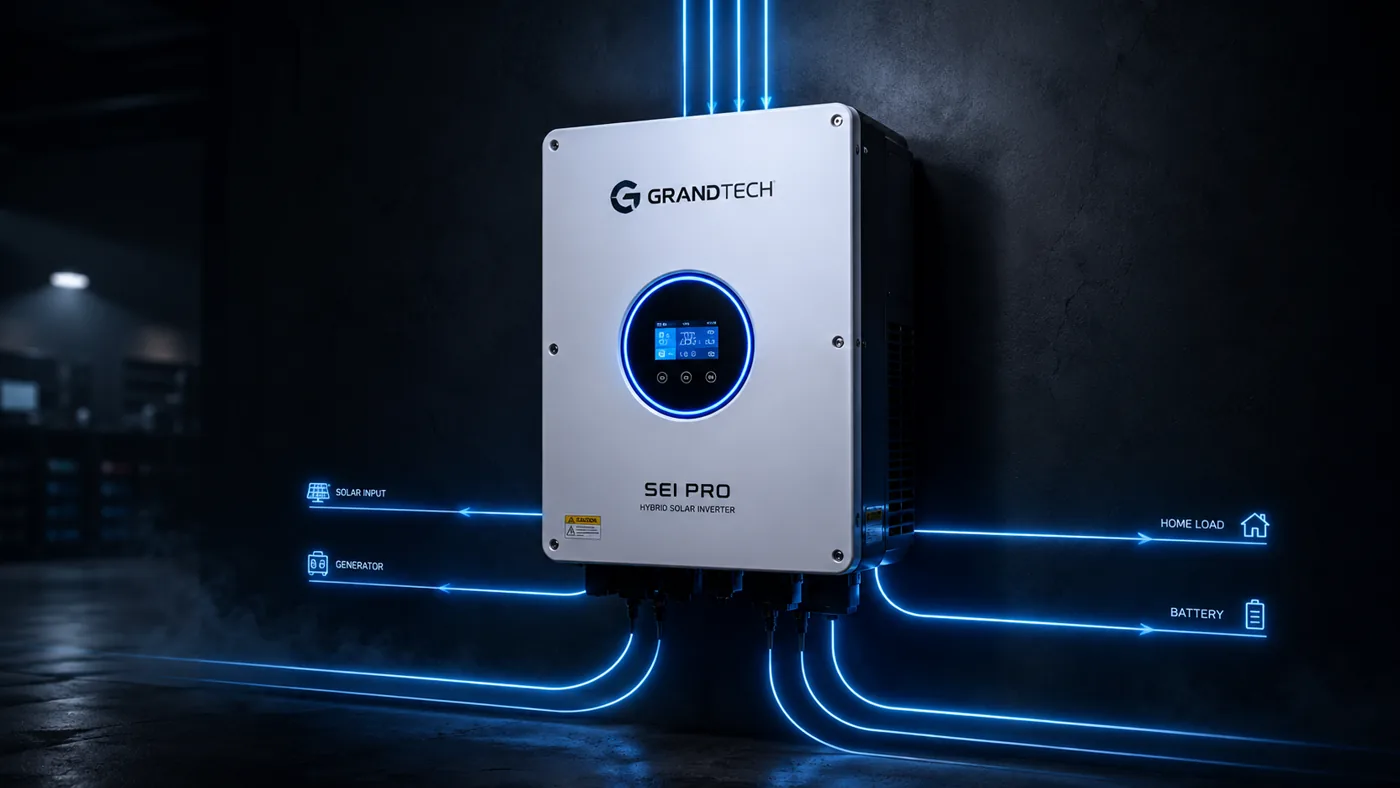
A grid-tie inverter has a single job, turning solar power into AC, and it switches off as soon as the grid goes dark. A hybrid inverter adds a backup mode and can charge a battery, so your home stays powered through outages, solar is saved for use after dark, and off-grid operation becomes possible. Want backup or batteries? Then a hybrid inverter (or another battery-based design) is the one to get.
The limits of grid-tie inverters
A grid-tie inverter, sometimes called a "string" inverter, takes the DC power your solar panels produce and turns it into AC that the house can use or send to the grid. For trimming your power bill, it's lean and efficient.
There's one big catch. As a safety measure, it switches off whenever the grid fails, so a home relying on a grid-tie-only setup gets no power during an outage, even under a cloudless sky.
The extras a hybrid brings
A hybrid inverter covers every task a grid-tie unit handles and then goes further: it can charge a battery and draw power back from it, and it has a dedicated backup output. If the grid goes down, it separates your home from it (a step known as islanding) and keeps everything running on battery and solar power. Our split-phase hybrids switch over in under 10 ms when the grid drops, quick enough that lights and computers won't flicker.
The same unit lets you bank low-cost or solar energy and draw on it at night or while peak rates apply, and it can grow into a fully off-grid system.
Which fits your plans?
Is a smaller electric bill your only goal, with no need for backup ever? Then go with grid-tie, the less expensive route.
A hybrid inverter is the better fit if you:
- want protection during outages,
- plan to add batteries, whether now or later, or
- intend to go off-grid.
Keep in mind that retrofitting batteries onto a setup built around a grid-tie inverter usually means swapping out the inverter.
Questions people ask
Will a grid-tie inverter keep my power on in an outage?
It won't. A typical grid-tie unit turns itself off for safety whenever the grid fails, leaving neither your panels nor a battery able to supply the house. To get backup, you'll need a hybrid inverter or another battery-based model.
Can a hybrid inverter run without a battery?
Yes. A hybrid inverter is ready for a battery but works without one at first. You can put it in today and bring in LiFePO4 storage at a later date, which makes it the smarter pick if you see backup power or off-grid living in your future.