How much home battery backup do you really need?
Usable storage for most homes lands somewhere between 10 and 30 kWh. The quick method: total the daily kWh of every load you want covered, multiply that by the days of autonomy you're after, then add roughly 20% as a buffer. If you only need the essentials, 16 kWh is often enough; powering the whole house or living off-grid usually takes 28 kWh or more.
Step 1: Essentials only, or the whole house?
Before you reach for a calculator, settle one question: what should keep running when the grid drops out? That choice drives battery size more than anything else.
- Essentials only: the refrigerator, lights, internet, phone charging, and a well pump or sump pump.
- Whole home: all of the above plus HVAC, an electric water heater, and EV charging.
Covering just the essentials gets you through an outage with far less storage. Backing up the entire house, or living fully off-grid, takes much more capacity, because air conditioning and electric heating are large loads that run for hours.
Step 2: Put a number on your daily kWh
Your utility bills already hold the answer. Pull the last 12, divide each month's kWh by 30, and you have your true daily average; a typical US home lands around 20-30 kWh per day.
Essentials alone need far less. Rough daily figures:
- Refrigerator: about 1-2 kWh
- Lights and electronics: about 1-3 kWh
- Well pump: about 1-2 kWh
That usually totals 4-8 kWh a day. Going off-grid? Size from your heaviest month, not the yearly average, so winter or peak summer never leaves you short.
Step 3: Decide how long it has to go it alone
"Days of autonomy" is the number of days the battery must carry your loads without any recharge. If you're on the grid and only guarding against ordinary outages, one day usually suffices, since solar or the returning grid refills it quickly. Off-grid homes should plan on 2-3 days to get through overcast spells.
Usable kWh required ≈ (kWh per day × autonomy days) ÷ DoD
DoD is the depth of discharge. LiFePO4 can safely use around 90-100% of its rated capacity, which keeps the arithmetic easy.
Step 4: Pick the hardware
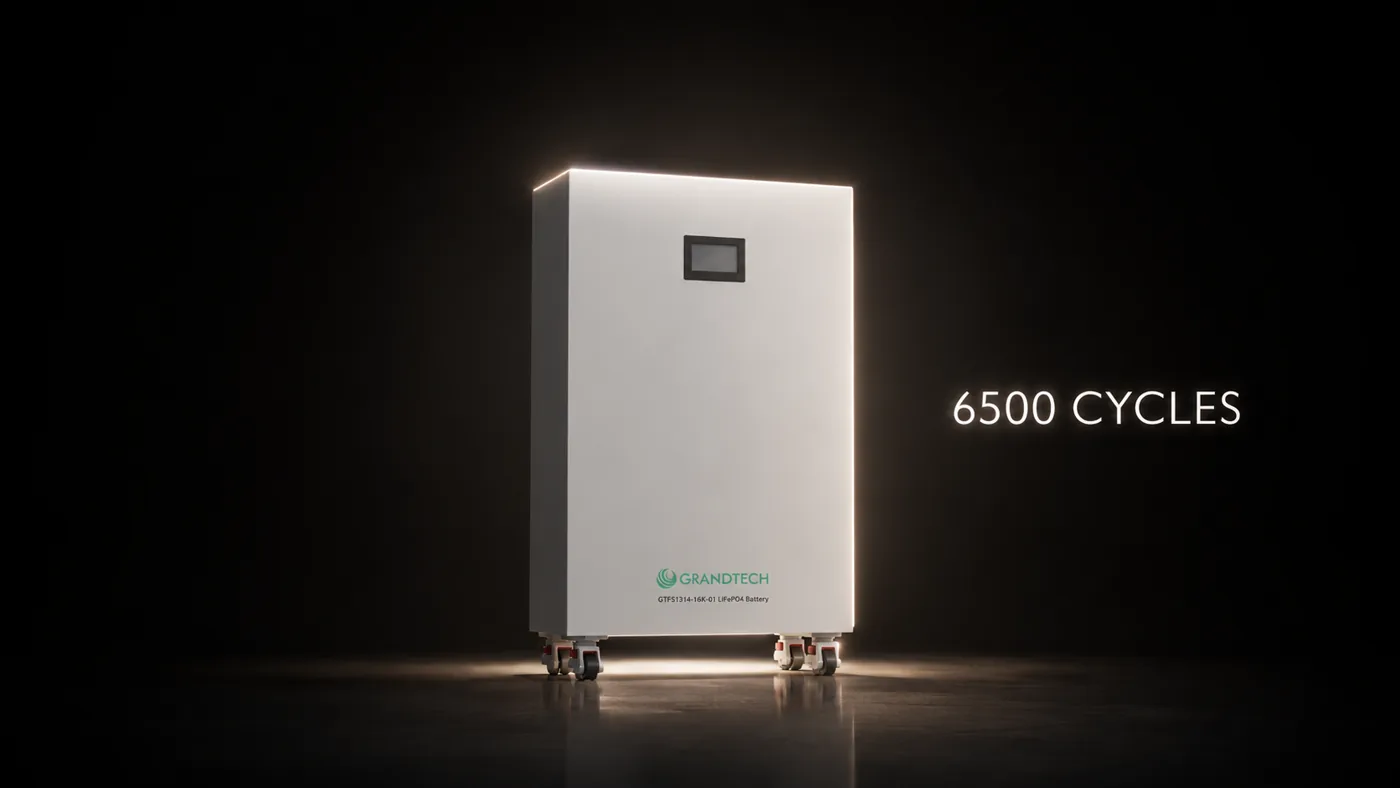
For essentials-only backup, one 16 kWh LiFePO4 battery can carry you through a day or longer. Once HVAC enters the picture, or you're going fully off-grid, expect to need 28 kWh or more, which is usually reached by linking several modules in parallel.
The battery is only half of the system. The hybrid inverter beside it should match your peak load, meaning the highest draw your home sees at any single moment, rather than your daily energy total. For most households a split-phase hybrid inverter rated at 10-12 kW does the job, start-up surge from central air conditioning included.
Questions people ask
How much battery does a house need to get through 24 hours?
That depends on what you keep on. Essential loads drawing 6-8 kWh a day will run for well beyond 24 hours on one 16 kWh LiFePO4 battery. To cover the whole house, HVAC included, for a complete day, budget for at least 28 kWh of usable capacity.
Can I grow my battery bank later?
You can. Modular LiFePO4 batteries are built to be connected in parallel, so beginning with a single module and adding more as your needs grow is completely normal. Just make sure your inverter and busbar can handle the extra batteries.
Is battery size tied to the inverter I choose?
Not directly, since the two do different jobs. Capacity in kWh decides how long your loads keep running; inverter power in kW decides how much can run simultaneously. Base the battery on your daily energy consumption and the inverter on the largest load your home pulls at one time.